
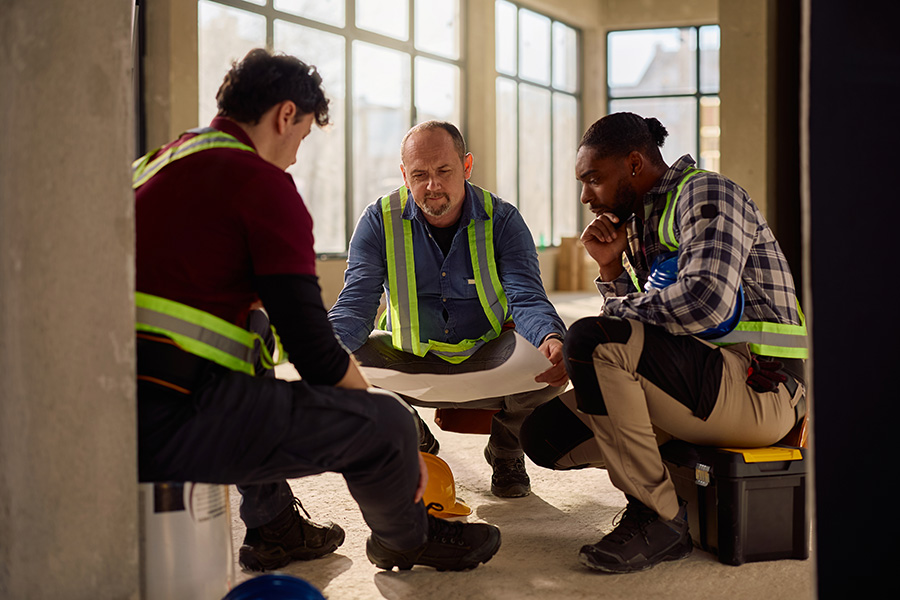
In the trades, a few minutes of conversation before work begins can make a significant difference to how safely and efficiently a job is completed.
That’s where toolbox talks come in.
Toolbox talks are short, practical discussions held with workers about safety, hazards, workplace procedures and other issues relevant to the work being carried out. They might take place at the beginning of a shift, before starting a new task, when conditions change or when a particular safety concern needs to be addressed.
While they can sometimes feel like just another item on the day’s checklist, a good toolbox talk should be much more than that.
Used effectively, toolbox talks can help workers understand what’s happening on-site, identify potential hazards, clarify responsibilities and create an opportunity for everyone to raise concerns before work begins.
For apprentices and experienced tradespeople alike, they’re an important part of building a workplace where communication and safety are taken seriously.
1. They Get Everyone on the Same Page
Tradespeople rarely work completely independently.
On a busy construction site or in a workshop, you may have multiple workers completing different tasks at the same time. There could also be subcontractors, apprentices, supervisors and other trades working around one another.
That creates plenty of opportunities for miscommunication.
A toolbox talk gives the team an opportunity to discuss the work ahead before everyone gets started.
Workers can clarify:
- What work is being completed
- Who is responsible for particular tasks
- What equipment will be used
- What hazards may be present
- Whether site conditions have changed
- What safety controls need to be followed
It might only take a few minutes, but that conversation can help ensure everyone begins the job with a clearer understanding of what’s happening around them.
2. They Keep Safety Front of Mind
Most experienced tradespeople understand the risks associated with their work.
The challenge is that familiarity can sometimes make hazards feel routine.
When you’ve completed the same task hundreds of times, it’s easy to become comfortable with the process.
Toolbox talks provide an opportunity to bring safety back to the front of everyone’s mind.
A discussion could focus on something specific to the day’s work, such as manual handling, working at heights, electrical hazards, machinery, personal protective equipment, hazardous materials or safe use of tools.
The topic doesn’t need to be complicated.
The most useful toolbox talks are often directly connected to what workers are about to encounter.
Instead of discussing safety in general terms, the team can ask: What could go wrong with the work we’re doing today, and what are we going to do about it?
That makes the conversation practical and relevant.
3. They Help Identify Hazards Before Work Starts
One of the biggest advantages of talking about a job before beginning is that someone may notice something another person has missed.
Perhaps site access has changed.
Maybe another trade is working nearby.
A piece of equipment might not be available, weather conditions may create an additional risk or the work area may be different from what was expected.
A toolbox talk gives workers an opportunity to identify these issues before they become problems.
Importantly, the conversation shouldn’t only come from the supervisor.
The people physically completing the work often have valuable insight into the practical risks involved.
An experienced worker may recognise a hazard based on something they’ve encountered previously, while another team member may notice something specific to the current work environment.
Creating space for those observations can help the team make better decisions before work begins.
4. They Give Apprentices an Opportunity to Learn
Toolbox talks can be particularly valuable for apprentices and workers who are still developing their skills.
When you’re new to a trade, there can be a lot happening around you at once.
You’re learning practical skills, terminology, tools, equipment, workplace expectations and safety procedures — often while trying to keep up with experienced tradespeople.
A good toolbox talk gives apprentices an opportunity to hear how experienced workers think about a job before they begin it.
Why is a particular hazard important?
Why is one method being used instead of another?
What needs to be checked before starting?
What should you do if conditions change?
These conversations can reinforce what an apprentice is learning through their formal training and workplace experience.
They can also encourage apprentices to ask questions rather than simply copying what someone else is doing without understanding why.
That’s an important part of developing competent, independent tradespeople.
5. They Encourage Workers to Speak Up
Good workplace communication shouldn’t only happen from the top down.
Workers should feel able to raise concerns, ask questions and clarify instructions when something doesn’t seem right.
Toolbox talks can help create a regular opportunity for this to happen.
Instead of waiting until a problem occurs, workers can raise issues before the job gets underway.
That might include questions about equipment, unclear instructions, access problems, site conditions or potential hazards.
This is particularly important for apprentices and less experienced workers.
Someone who is new to a workplace may hesitate to interrupt an experienced tradesperson during a busy job. A structured discussion can make it easier to ask a question or seek clarification.
Creating a workplace where people feel comfortable speaking up can benefit everyone.
6. They Can Respond to Changing Conditions
Worksites aren’t static environments.
Conditions can change throughout a project, and yesterday’s risk assessment may not reflect exactly what’s happening today.
New workers may arrive on-site.
Equipment may move.
Access points can change.
Weather can affect working conditions.
Another trade may begin working in the same area.
The job itself may also change as a project progresses.
Toolbox talks provide an opportunity to respond to those changes.
They don’t necessarily need to follow the same script every day. In fact, they’re generally more useful when the discussion reflects what’s actually happening in the workplace.
If something has changed, that’s exactly the kind of issue worth discussing.
7. They Reinforce That Safety Is Everyone’s Responsibility
Safety isn’t solely the responsibility of the site manager, supervisor or most experienced tradesperson.
Everyone has a role to play.
Toolbox talks can reinforce this by involving the entire team in workplace safety conversations.
An apprentice may notice something a supervisor hasn’t.
A tradesperson might identify an issue with equipment.
A worker who has completed a similar job before may know about a problem that isn’t immediately obvious.
When workers are encouraged to participate rather than simply listen, safety becomes something the team actively contributes to.
This helps move toolbox talks away from being a box-ticking exercise and towards being a useful workplace practice.
8. Good Toolbox Talks Should Be Relevant
A toolbox talk doesn’t need to be long to be useful.
In fact, keeping the discussion focused can make it more effective.
The key is relevance.
If workers hear the same generic message repeatedly, it’s easy to stop paying attention.
A better approach is to connect the discussion to the work being performed.
For example, if workers will be manually handling heavy materials, talk about manual handling.
If they’re using a particular piece of machinery, discuss the relevant hazards and procedures.
If an incident or near miss has occurred, discuss what happened and what can be learned from it.
If site conditions have changed, make sure everyone knows.
The goal isn’t simply to say that a toolbox talk happened.
The goal is for workers to leave the discussion with information that helps them complete their work more safely and effectively.
Toolbox Talks Are Also About Communication
While toolbox talks are closely associated with workplace safety, they also highlight something broader: communication is an essential trade skill.
Being technically capable is only one part of working effectively in the trades.
You also need to be able to listen to instructions, explain problems, communicate with supervisors and coworkers, ask questions when you’re unsure and pass information on clearly.
As workers become more experienced, those communication skills often become even more important.
A tradesperson may eventually be responsible for supervising apprentices, coordinating work with other trades or explaining requirements to clients and team members.
Toolbox talks provide one everyday example of how communication forms part of working professionally within the trade industry.
Make Toolbox Talks Count
A toolbox talk shouldn’t simply be something workers stand through before getting on with the “real” work.
When they’re relevant, practical and encourage genuine participation, they can be a valuable part of the working day.
They give teams an opportunity to identify hazards, clarify responsibilities, respond to changing conditions and share knowledge.
For apprentices, they provide another opportunity to learn from experienced tradespeople.
For experienced workers, they’re an opportunity to share knowledge and help build stronger workplace practices.
And for the entire team, they’re a reminder that good communication and safe work go hand in hand.
Building Better Tradespeople Through Training and Experience
Becoming a capable tradesperson isn’t only about learning how to use tools or complete a particular task.
It also involves understanding workplace safety, communicating effectively, working as part of a team and making appropriate decisions in real working environments.
These are skills that develop through a combination of structured training and practical workplace experience.
At Gimbal Training, we work with apprentices and experienced tradespeople across a range of industries to help them develop and formally recognise the skills required in today’s workforce.
Whether you’re beginning your career through an apprenticeship or you’re an experienced worker exploring Recognition of Prior Learning (RPL), the skills you build extend beyond the tools in your hands.Strong tradespeople communicate, contribute and work safely — and a good toolbox talk is one small but important part of making that happen.