
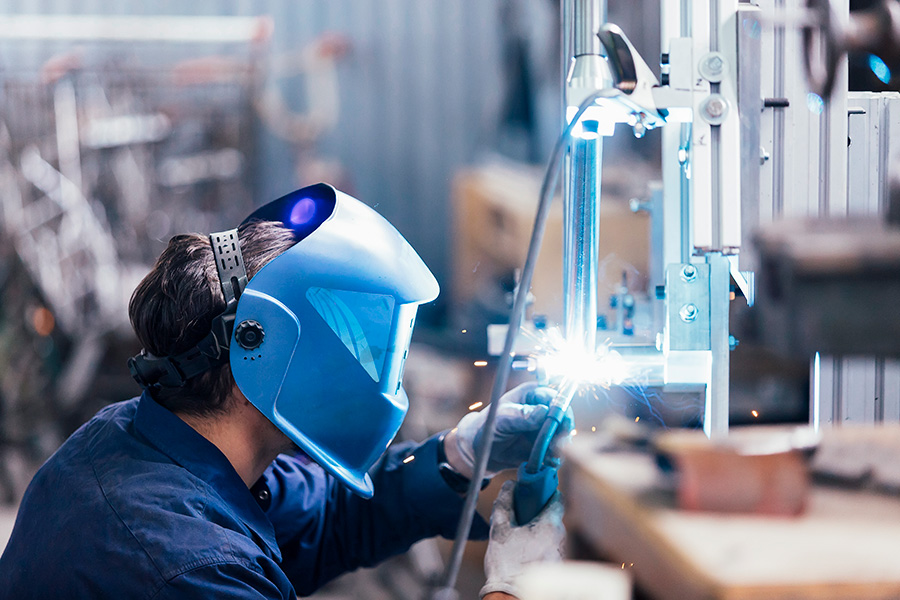
Welding is one of the most important practical skills used across engineering and fabrication.
From structural steel and heavy fabrication to sheet metal, repairs and precision work, different jobs require different welding processes. Three of the most common are MIG, TIG and Stick welding.
While each process joins metal using heat, the way they work, the equipment involved and the situations they are best suited to can vary significantly.
For apprentices and experienced fabrication workers alike, understanding the differences between these welding methods is an important part of developing broader trade competency.
The MEM31925 – Certificate III in Engineering – Fabrication Trade offered by Gimbal Training includes a range of welding-related units alongside fabrication, cutting, measurement, technical drawing and workplace safety competencies.
Why Different Welding Processes Matter
There is no single welding process that is best for every job.
The right method can depend on factors such as:
- the type of metal being welded
- material thickness
- joint design
- required finish
- welding position
- whether the work is being completed indoors or outdoors
- productivity requirements
- the equipment available.
A skilled fabricator needs to understand not only how to weld, but also how to select an appropriate process for the task.
This is reflected in the MEM31925 – Certificate III in Engineering – Fabrication Trade qualification, which includes welding electives covering gas metal arc welding, gas tungsten arc welding, manual metal arc welding and flux core arc welding, as well as a unit focused specifically on selecting welding processes.
What Is MIG Welding?
MIG welding is commonly known in industry as Gas Metal Arc Welding, or GMAW.
It uses a continuously fed wire electrode that passes through the welding gun. An electric arc forms between the wire and the workpiece, creating enough heat to melt the metal and form the weld.
A shielding gas is used to help protect the weld pool from contamination in the surrounding atmosphere.
Why Is MIG Welding Popular?
MIG is widely used because it can be relatively fast and efficient, particularly for repetitive fabrication work.
It can be suitable for materials including:
- mild steel
- stainless steel
- aluminium
- other suitable alloys.
Because the wire feeds automatically through the welding gun, experienced operators can maintain relatively continuous welds without repeatedly replacing electrodes.
Where Might MIG Be Used?
MIG welding may be seen in:
- general fabrication workshops
- structural fabrication
- manufacturing
- automotive work
- machinery fabrication
- sheet metal work
- repair work.
Within the MEM31925 qualification, relevant elective units include MEM05050 – Perform routine gas metal arc welding, MEM05073 – Perform advanced welding using gas metal arc welding process, and MEM05091 – Weld using gas metal arc welding process.
What Is TIG Welding?
TIG welding is commonly referred to as Gas Tungsten Arc Welding, or GTAW.
Unlike MIG welding, TIG uses a non-consumable tungsten electrode to generate the welding arc.
Depending on the job, filler metal can be added separately by the welder.
This gives the operator a high level of control over the weld pool and makes TIG useful where appearance, accuracy and heat control are particularly important.
When Is TIG Welding Useful?
TIG is commonly associated with work involving:
- stainless steel
- aluminium
- thinner materials
- detailed fabrication
- precision components
- applications where a clean weld finish is important.
It can take more control and coordination than some other welding methods, particularly because the welder may need to manage the torch, filler rod and heat input simultaneously.
For this reason, TIG welding is often valued for jobs where precision is more important than speed.
The MEM31925 – Certificate III in Engineering – Fabrication Trade qualification includes TIG-related electives such as MEM05049 – Perform routine gas tungsten arc welding, MEM05074 – Perform advanced welding using gas tungsten arc welding process, and MEM05092 – Weld using gas tungsten arc welding process.
What Is Stick Welding?
Stick welding is the common name for Manual Metal Arc Welding, often shortened to MMAW.
In this process, the welder uses a consumable coated electrode.
When the electrode creates an arc with the workpiece, both the electrode and base material melt to form the weld. The electrode’s coating helps provide shielding and produces slag over the weld, which is removed after cooling.
Why Is Stick Welding Still Widely Used?
Stick welding is well suited to many heavy-duty and site-based applications.
It is often used for:
- structural steel
- repair and maintenance work
- heavy fabrication
- agricultural equipment
- construction sites
- outdoor welding.
One advantage is that it does not rely on a separate external shielding gas in the same way that conventional MIG and TIG welding do. This can make it useful in outdoor or less controlled environments where wind may interfere with gas shielding.
The MEM31925 includes units such as MEM05012 – Perform routine manual metal arc welding, MEM05072 – Perform advanced welding using manual metal arc welding process, and MEM05090 – Weld using manual metal arc welding process.
MIG vs TIG vs Stick: What’s the Difference?
At a basic level, the three processes can be compared like this:
| Process | Common name | Key characteristic | Common applications |
| GMAW | MIG | Continuously fed wire electrode and shielding gas | General fabrication, manufacturing and production |
| GTAW | TIG | Tungsten electrode with precise control | Stainless steel, aluminium and detailed work |
| MMAW | Stick | Flux-coated consumable electrode | Structural, heavy fabrication and site work |
However, choosing a welding process should never be based on convenience alone.
Material properties, thickness, joint design, welding position, quality requirements and workplace procedures all need to be considered.
Good Welding Starts Before the Arc
One of the most important things for apprentices to understand is that good welding involves much more than running a bead.
Before welding begins, a fabricator may need to:
- interpret technical drawings
- measure and mark out materials
- prepare and clean the joint
- cut and shape components
- select the appropriate welding process
- choose suitable consumables and settings
- position and secure components
- identify hazards
- select appropriate PPE.
After welding, the work may also need to be inspected, finished, measured and checked against specifications.
That broader skill set is a major part of becoming a competent fabrication tradesperson.
The MEM31925 Certificate III in Engineering – Fabrication Trade qualification reflects this by combining welding units with competencies in technical drawing, engineering measurement, computations, planning work, hand and power tools, fabrication, forming, cutting and safe work practices.
Welding Safety Is Just as Important as Welding Technique
All welding processes introduce hazards that need to be properly controlled.
Depending on the work environment, these may include:
- intense ultraviolet and infrared radiation
- burns
- hot metal
- sparks and spatter
- welding fumes
- gases
- electrical hazards
- fire risks
- noise
- manual handling
- surrounding workers and equipment.
Good welding practice therefore includes appropriate PPE, ventilation or fume controls, safe equipment setup, correct handling of materials and awareness of the surrounding work area.
MEM31925 Certificate III in Engineering – Fabrication Trade includes MEM13015 – Work safely and effectively in manufacturing and engineering, while its elective options also include MEM05052 – Apply safe welding practices.
Welding Skills Within the Qualification
The MEM31925 – Certificate III in Engineering – Fabrication Trade is a nationally recognised qualification designed for the metal fabrication and welding industries.
Gimbal Trainings course covers areas including welding techniques, sheet metal work, metal cutting and forming, technical drawings, workplace safety and working with materials such as steel and aluminium.
Depending on the electives selected and the learner’s area of specialisation, the qualification can include experience across several different welding methods rather than focusing on only one process.
Potential career outcomes listed by Gimbal include:
- Fabricator
- Welder
- Sheet Metal Worker
- Boilermaker.
Learning More Than Just How to Weld
MIG, TIG and Stick welding each have an important place in the fabrication industry.
Knowing the basic differences between them is a good starting point, but becoming a qualified fabrication tradesperson requires a much broader understanding of materials, drawings, measurements, fabrication techniques, quality and workplace safety.
For apprentices, that means developing these skills progressively through workplace experience and structured training.
For experienced fabrication workers, Recognition of Prior Learning may also provide an opportunity to have existing skills and knowledge assessed against the requirements of the qualification.
Gimbal Training offers the MEM31925 – Certificate III in Engineering – Fabrication Trade through apprenticeship and RPL pathways. The qualification includes both theoretical knowledge and practical fabrication skills, helping learners build the competencies required to work across the engineering fabrication industry.
Interested in building or formally recognising your fabrication skills?
Contact Gimbal Training to find out more about the MEM31925 – Certificate III in Engineering – Fabrication Trade and the training or RPL pathway that may suit your experience.