
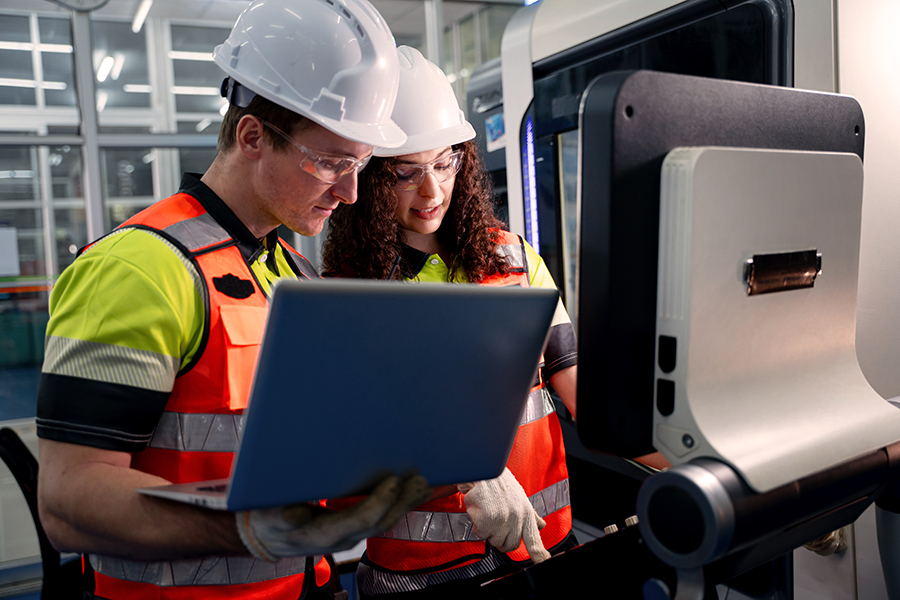
The Australian trades industry has always evolved alongside new tools, equipment and ways of working. Today, that change is happening faster as automation, robotics, digital systems and artificial intelligence become more common across construction, engineering, manufacturing, automotive and other trade environments.
For apprentices and experienced tradespeople alike, this doesn’t necessarily mean traditional trade skills are becoming less important. In many cases, technology is changing how those skills are applied.
So what does this shift actually look like on the tools?
Automation Is Becoming Part of the Workshop
Engineering and manufacturing are some of the clearest examples of technology changing traditional trade work.
Processes that were once completed entirely by hand can now involve equipment such as CNC machinery, automated cutting systems, computer-controlled production equipment and robotic systems.
Rather than eliminating the need for skilled tradespeople, these technologies can change the type of work they perform.
A tradesperson may still need to understand materials, measurements, tolerances, drawings and fabrication techniques, but they may also need to:
- Set up and operate computer-controlled machinery
- Interpret digital drawings and specifications
- Monitor automated processes
- Identify faults and troubleshoot equipment
- Check finished products against required tolerances
- Maintain increasingly sophisticated machinery
Australia’s Industry 4.0 initiatives have specifically focused on technologies including automation, artificial intelligence and cloud computing as part of the digital transformation of manufacturing.
The fundamentals of the trade still matter. Technology simply adds another layer of skills.
Smarter Machinery Means Different Maintenance Skills
Mechanical trades are changing too.
Modern machinery can contain sensors, electronic controls, programmable systems and connected monitoring technology alongside traditional mechanical components.
This means fault-finding may involve more than inspecting a worn bearing or replacing a damaged component. Tradespeople may also need to understand information generated by the machine itself and determine whether a problem is mechanical, electrical, electronic or related to a control system.
Automation can also help businesses identify potential problems before equipment completely fails, allowing maintenance to become more preventative rather than purely reactive.
As equipment becomes more advanced, the ability to understand how mechanical and digital systems work together becomes increasingly valuable.
Construction Is Becoming More Digital
Technology on a construction site isn’t necessarily a robot laying bricks.
Some of the biggest changes are happening through everyday digital tools.
Australian construction businesses are increasingly using technology for activities such as project planning, scheduling, estimating, quoting, invoicing, document management and communication between contractors and clients.
Other technologies being introduced across the broader construction sector include Building Information Modelling (BIM), drones, prefabrication, 3D printing and digital project management systems.
For tradespeople, this can mean receiving plans digitally rather than on paper, recording work through an app, accessing job information from a tablet or phone, uploading evidence of completed work or coordinating with other trades through digital systems.
Being comfortable with technology is therefore becoming another practical workplace skill.
Robotics Can Take on Repetitive or Higher-Risk Tasks
One of the major advantages of automation is its ability to perform work that is repetitive, highly precise or potentially hazardous.
Australia’s National Robotics Strategy highlights benefits including improved precision and reliability, greater productivity, reduced waste and improved workplace health and safety. It also notes Australia’s existing use of automation in environments such as mining to reduce workers’ exposure to dangerous tasks.
That doesn’t remove the need for skilled people.
Automated equipment still needs to be:
- Installed
- Set up correctly
- Operated
- Monitored
- Maintained
- Repaired
- Checked for quality and safety
As machinery becomes more sophisticated, the tradespeople working alongside it need the skills to understand both the task being performed and the equipment performing it.
Electric Vehicles and Clean Energy Are Creating New Trade Skills
Technology is also changing the type of infrastructure and equipment Australian tradespeople work with.
Electric vehicles, battery storage, solar, renewable energy infrastructure and increasingly electrified equipment are creating new areas of work for electrical, automotive, mechanical and engineering trades.
For today’s apprentices, some of the technology they encounter throughout their careers may look very different from what was common when their supervisors first entered the trade.
Artificial Intelligence Is Entering the Workplace Too
AI is another technology beginning to influence Australian workplaces.
For trades and trade businesses, its most immediate applications may not involve AI physically performing the trade itself. Instead, it can assist with areas around the job — preparing documents, organising information, creating schedules, helping with administration or analysing data.
Jobs and Skills Australia’s research into generative AI found that the technology is more likely to augment the way Australians work than simply replace entire jobs, although the impact will vary considerably between occupations and industries.
For trade businesses, the opportunity may be less about replacing the person on the tools and more about reducing some of the time spent on repetitive administrative tasks.
Does Technology Make Traditional Trade Skills Less Important?
If anything, good foundational skills become even more important.
A machine may be able to automate part of a process, but a tradesperson still needs to recognise when something isn’t right.
Technology doesn’t replace the need to understand:
Measurements and tolerances. Safety procedures. Materials. Tools and equipment. Plans and specifications. Fault-finding. Quality workmanship.
Without that underlying trade knowledge, it can be difficult to recognise when technology is producing the wrong result.
The strongest tradespeople of the future are likely to combine solid practical skills with the ability to confidently work around evolving technology.
What Does This Mean for Apprentices?
For apprentices entering the industry today, being willing to continually learn will be an important part of their career.
An apprentice might qualify with one set of equipment and systems in the workplace and encounter completely different technology ten years later.
Developing good habits early can help — asking questions, understanding why a process is performed a particular way, learning how to read technical information and becoming comfortable with new equipment rather than simply memorising one way of doing something.
Digital skills are increasingly becoming part of being job-ready, but they sit alongside rather than replace the practical skills of the trade.
Training Needs to Evolve With Industry
As workplaces change, training needs to keep pace.
For Registered Training Organisations such as Gimbal Training, this makes staying connected with industry particularly important.
Apprentices need to develop the competencies required by their qualification, but they are ultimately preparing to work in real workplaces — workplaces where machinery, tools, systems and technology will continue to change throughout their careers.
The Tools Are Changing, but Skilled Tradespeople Still Matter
Automation and technology aren’t removing the need for trade knowledge.
They’re changing the environment in which that knowledge is used.
From automated machinery and digital drawings to electric vehicles, renewable energy systems and AI-assisted business tools, Australian tradespeople are increasingly working alongside technology rather than separately from it.
For apprentices, that creates an opportunity.
Learning a trade today isn’t only about mastering the tools currently in the workshop. It’s about building the practical knowledge, problem-solving ability and willingness to keep learning that will allow you to adapt to whatever tools come next.