
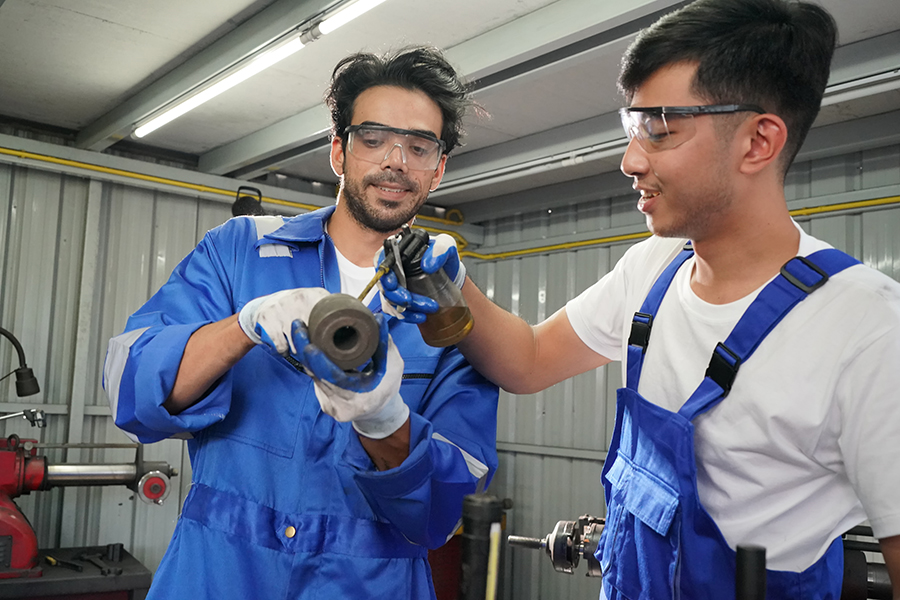
When it comes to learning a trade, there is only so much you can learn from sitting in a classroom.
For apprentices and employers, on-the-job training offers a practical alternative that allows skills to be developed in the environment where they will actually be used. Instead of regularly stepping away from the workplace for blocks of classroom training, apprentices can continue learning while gaining valuable real-world experience.
At Gimbal Training, our apprenticeship delivery model combines on-the-job training with formal theoretical and practical learning, helping apprentices develop their skills while continuing to work in their chosen industry.
Learn Where the Work Actually Happens
One of the biggest advantages of on-the-job training is that apprentices are learning in a real workplace.
Rather than practising skills in a simulated environment, they can apply what they are learning to real equipment, real jobs and real workplace situations.
For trade-based industries such as construction and engineering, this can make training more relevant and easier to understand. Apprentices are able to see how the knowledge and skills they are developing apply directly to the work they complete every day.
It also gives trainers the opportunity to assess practical skills within the apprentice’s normal working environment.
Less Time Away From the Workplace
Traditional training models can sometimes require apprentices to attend a training facility for several days or even weeks at a time.
While off-site training can still play an important role when required, workplace-based training can significantly reduce the amount of time an apprentice needs to spend away from their employer.
Gimbal Training provides regular workplace visits from industry-qualified trainers, meaning training and assessment can often take place on site.
For employers, this means less disruption to the workplace and less time without an apprentice who may already be an important part of the team.
Training That Can Be More Personalised
Every apprentice is different.
Some may already be confident in particular practical skills but need additional support with theory. Others may understand the theory but need more time developing their practical abilities.
A flexible workplace-based approach allows training to be better tailored to the individual apprentice and their workplace.
Instead of every learner progressing through exactly the same material at exactly the same pace, trainers can identify where additional guidance or training may be required and focus their support accordingly.
More One-on-One Support From Trainers
Another important benefit of workplace training is the opportunity for more direct interaction between the apprentice and trainer.
During site visits, trainers can work with apprentices individually, answer questions, observe their practical skills and provide feedback relevant to the work they are completing.
That individualised support can be particularly valuable for apprentices who may not learn as effectively in a large classroom environment.
It also allows trainers to better understand the apprentice’s current skills, workplace responsibilities and areas that may require further development.
Learn at a Pace That Suits the Apprentice
People don’t all learn at the same speed.
Gimbal Training’s apprenticeship model combines workplace training with formal theoretical and practical study, allowing apprentices to progress through their studies at a pace that suits them while continuing to develop their skills at work.
This can create a more manageable training experience, particularly for apprentices balancing employment, study and responsibilities outside of work.
Rather than separating work and training into two completely different environments, learning becomes part of the apprentice’s everyday development.
Immediate Opportunities to Put New Skills Into Practice
Learning a skill is one thing. Using it repeatedly in a real workplace is what helps build confidence and competence.
With on-the-job training, apprentices can often put newly developed knowledge into practice immediately.
For example, a concept discussed with a trainer can then be reinforced through the apprentice’s normal workplace tasks.
That connection between learning and doing can help apprentices understand not only how something is done, but also why it is done that way.
Employers Stay Involved in the Training Process
Workplace-based training can also create better communication between the apprentice, trainer and employer.
Because trainers visit the workplace, they can see first-hand the type of work the apprentice is completing and discuss their progress with workplace supervisors.
This collaborative approach helps ensure training remains relevant to both the qualification requirements and the apprentice’s actual work.
Employers also gain greater visibility over their apprentice’s development rather than training happening completely separately from the workplace.
Practical Training for Practical Careers
For many trades, the workplace is one of the best classrooms available.
On-the-job training allows apprentices to continue earning, developing practical experience and contributing to their workplace while progressing towards a nationally recognised qualification.
At Gimbal Training, we understand that apprentices and employers need training that works around the realities of the workplace.
Our apprenticeship training includes regular site visits from industry-qualified trainers, flexible training plans and delivery, workplace-based theory and practical assessment, as well as off-site training when required.
Want training that works with your workplace rather than taking you away from it?
Explore Gimbal Training’s apprenticeship pathways and find out how our flexible approach to training can support both apprentices and employers.